This post is a continuation from my last two posts which you can read by clicking here for part 1, and here for part 2.
I left Glasgow heading north again, this time towards Glencoe. The road followed the western side of Loch Lomond before turning north, then northwest, easing back into the Highlands. Glencoe doesn’t really need an introduction — dramatic scenery, a heavy history, and a landscape shaped as much by weather as anything else.
The shift from city to wilderness was immediate. Cold, dark, wet. It felt strange to be back out there again after a few days in Glasgow. I parked up for the night overlooking a deep valley, which seemed like a good idea at the time. It wasn’t. The valley funnelled the wind straight into the car and through my sleeping bag. Easily the coldest night of the trip.
By morning, everything had changed. Shifting patches of blue sky and cloud, snow on the tops, and that clear Highland light. The landscape felt empty and open, soaked in heather and shadow. The only sign of people was a thin grey line running through the valleys. From a distance, it looked more like a river than a road.
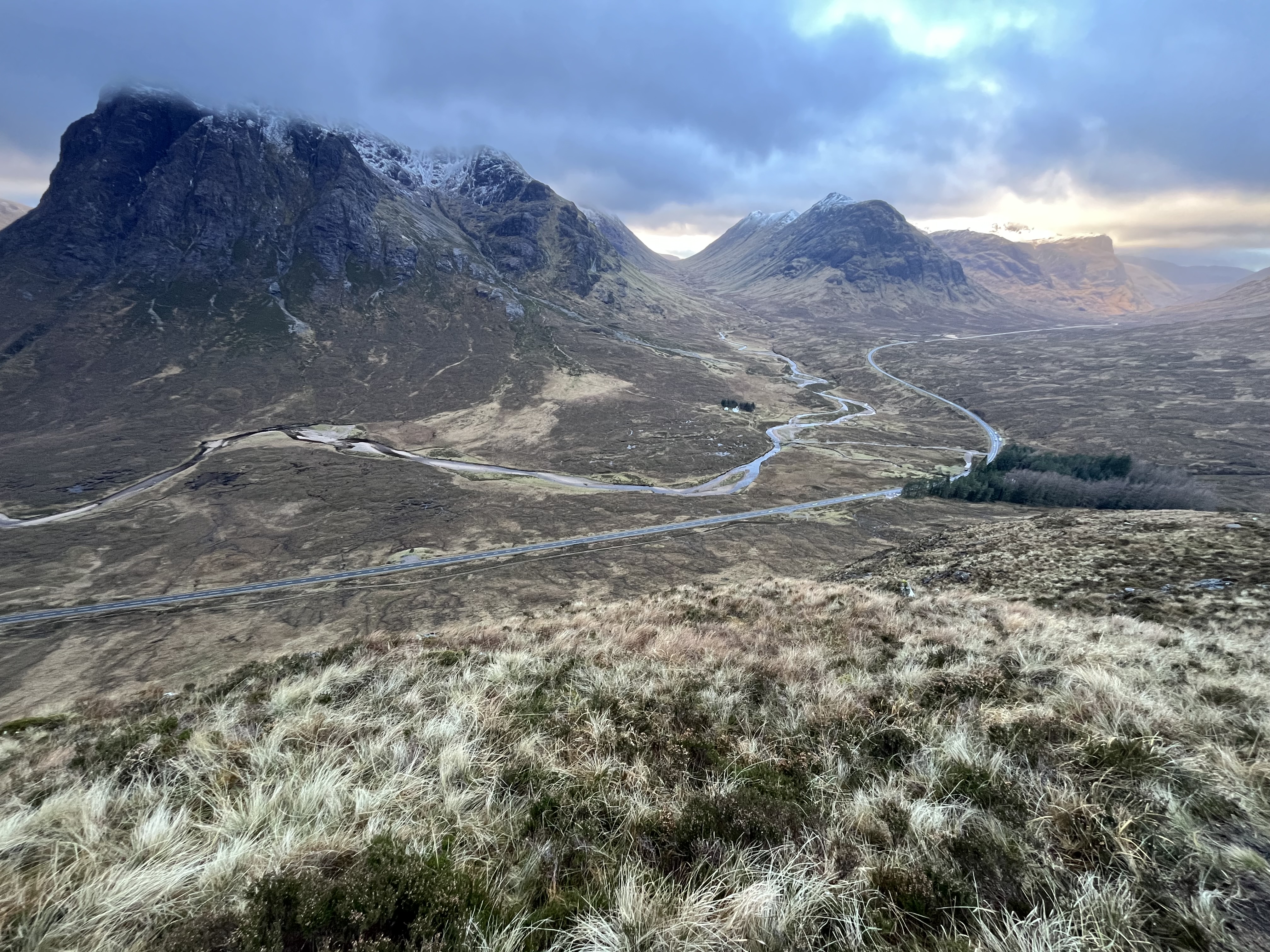
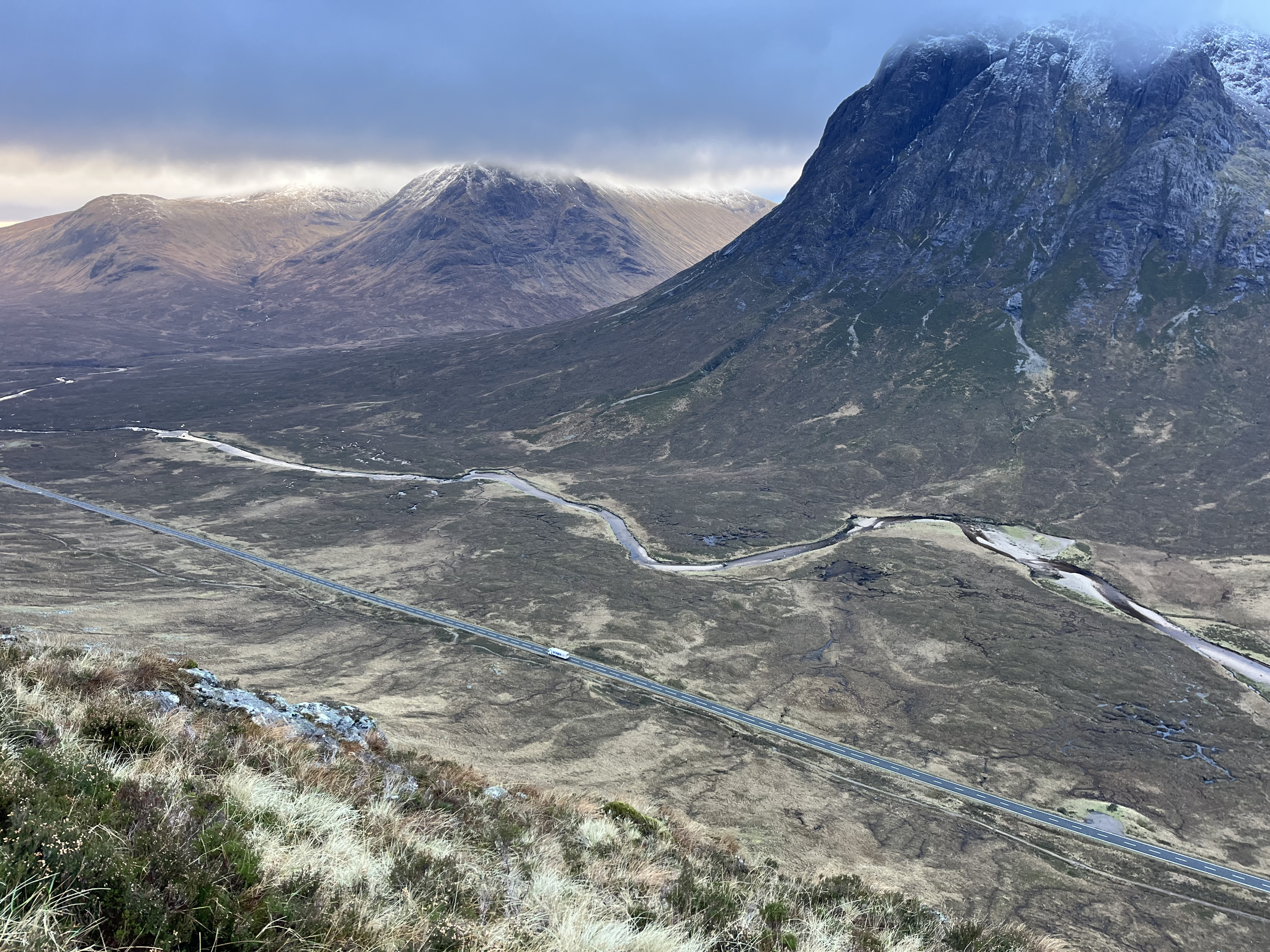
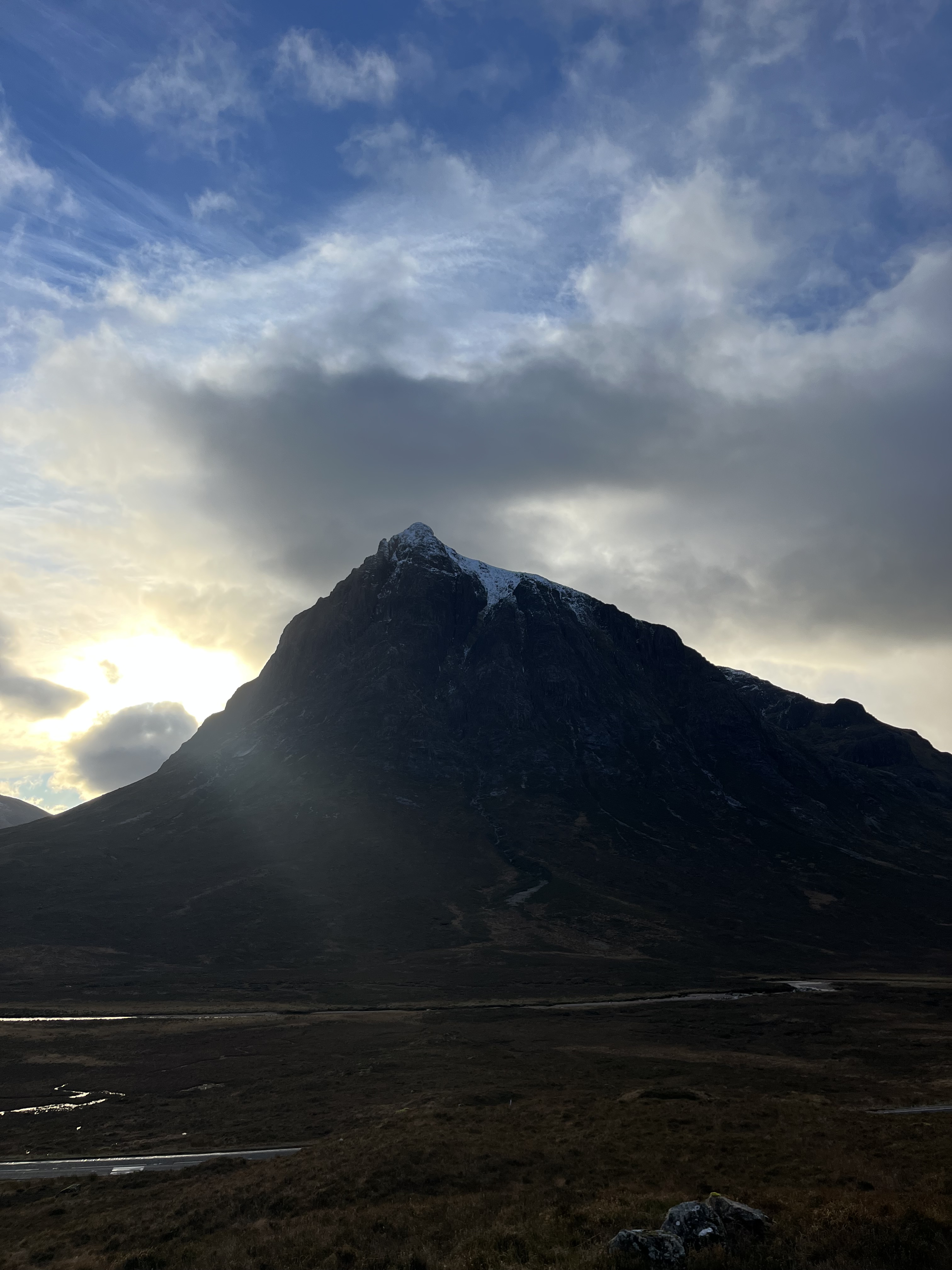
I found a moderate hike on AllTrails and headed out. Parking was easy — one of the benefits of being there in winter. The route climbed steadily, looped around the back of a hill, levelled out on a plateau, then dropped back towards the road.
I only saw one other person all day. He turned out to be from Derby — my home city — and was travelling around Scotland testing a new camper conversion. Another one of those coincidences that don’t seem unusual when you’re travelling.
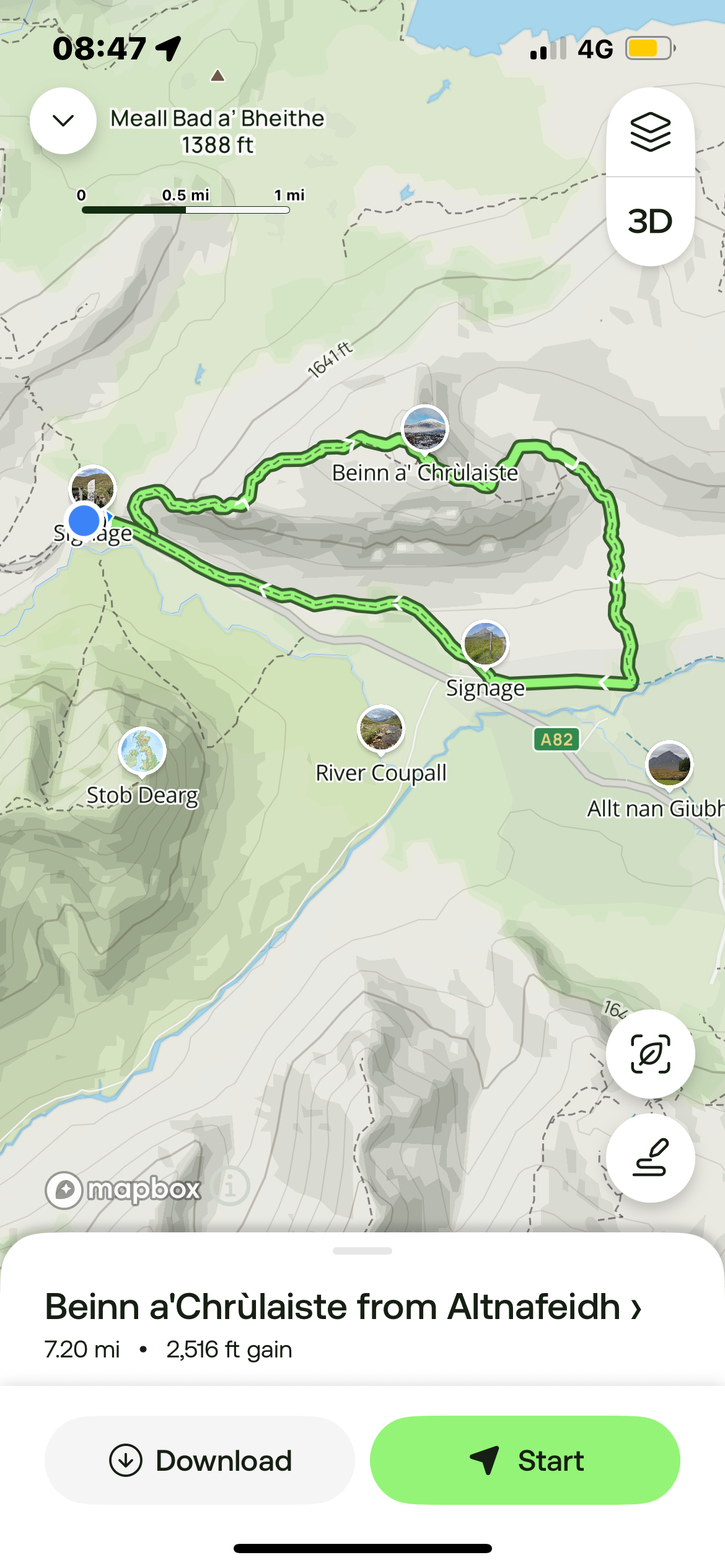
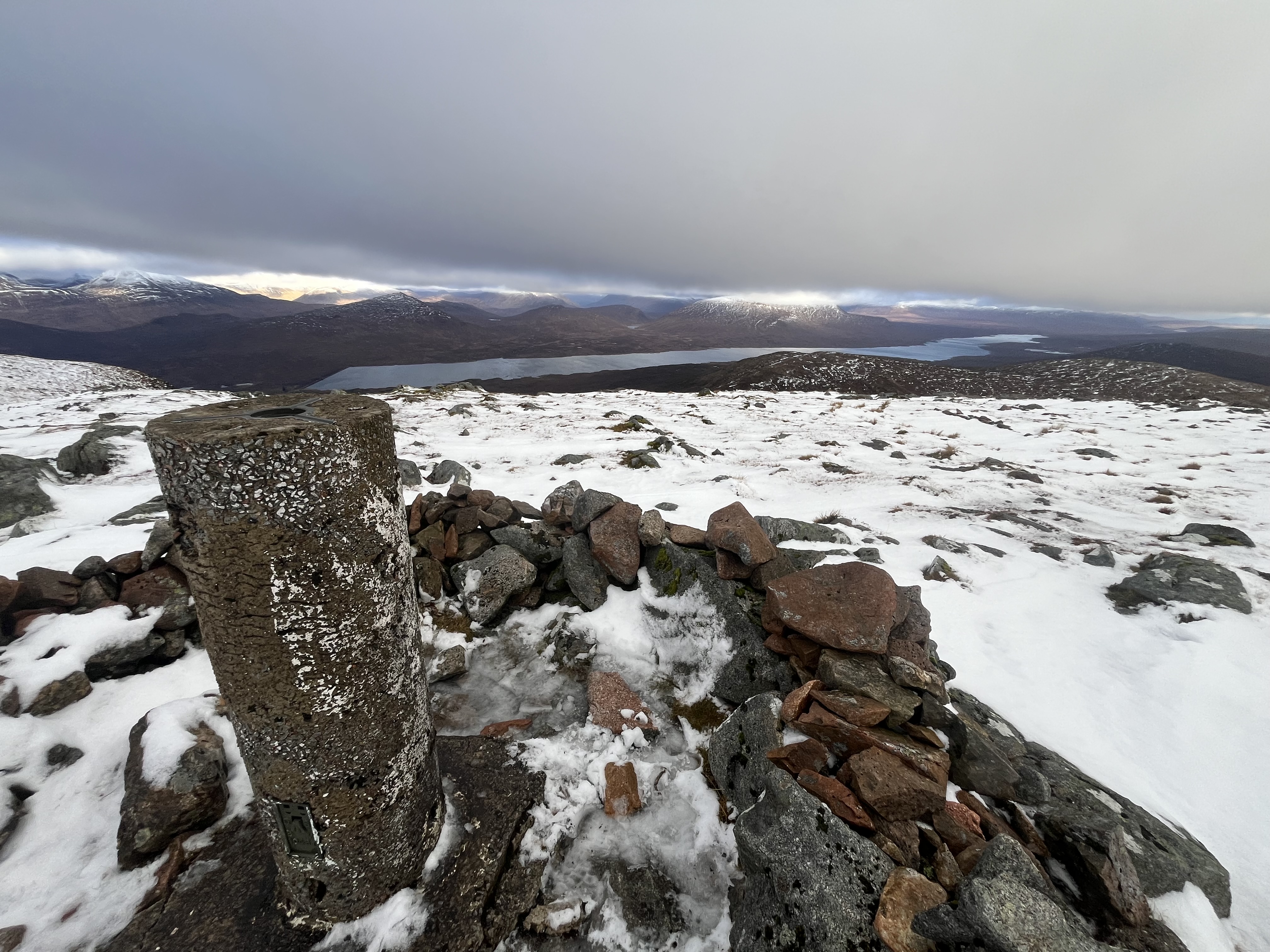
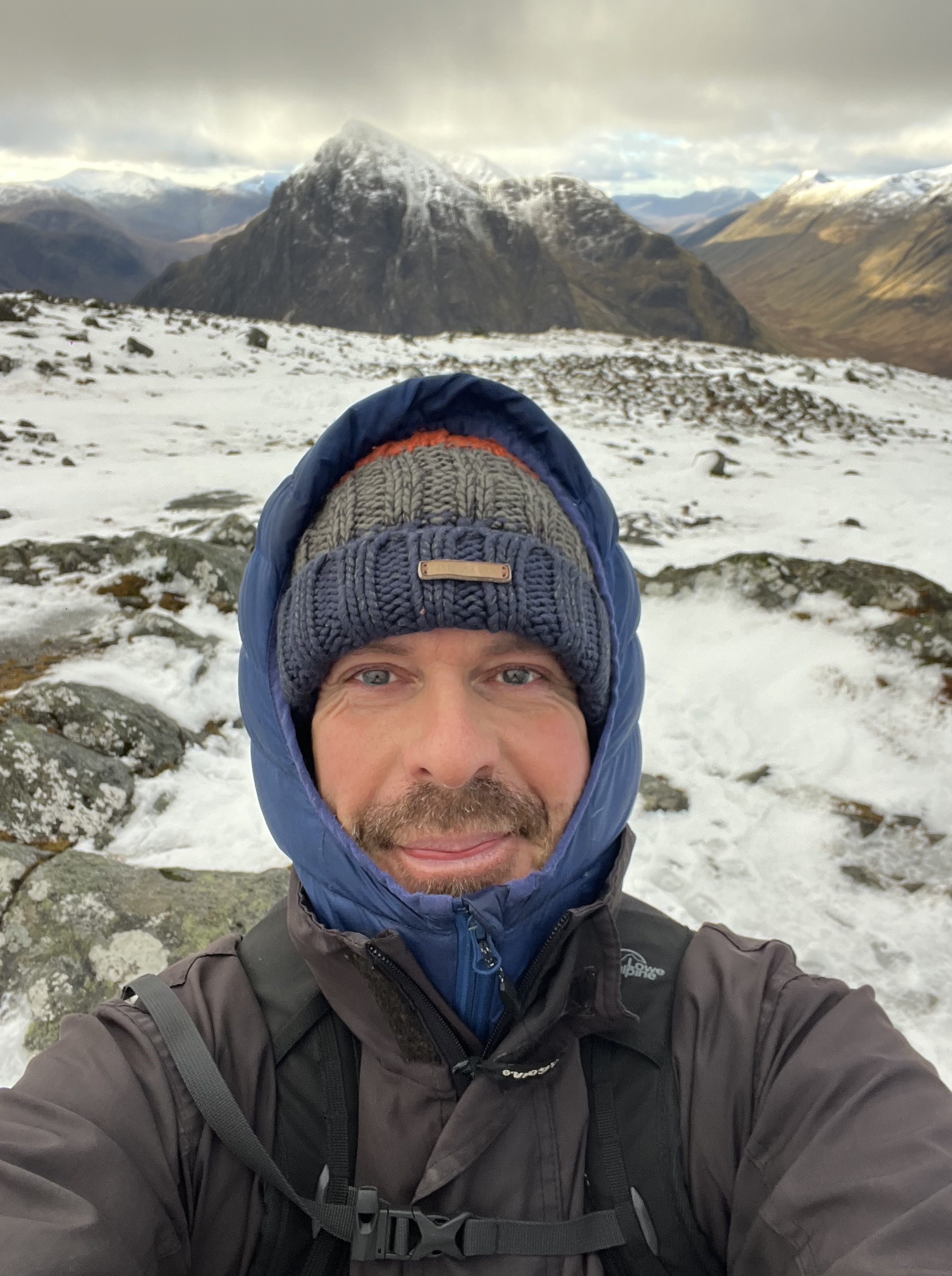
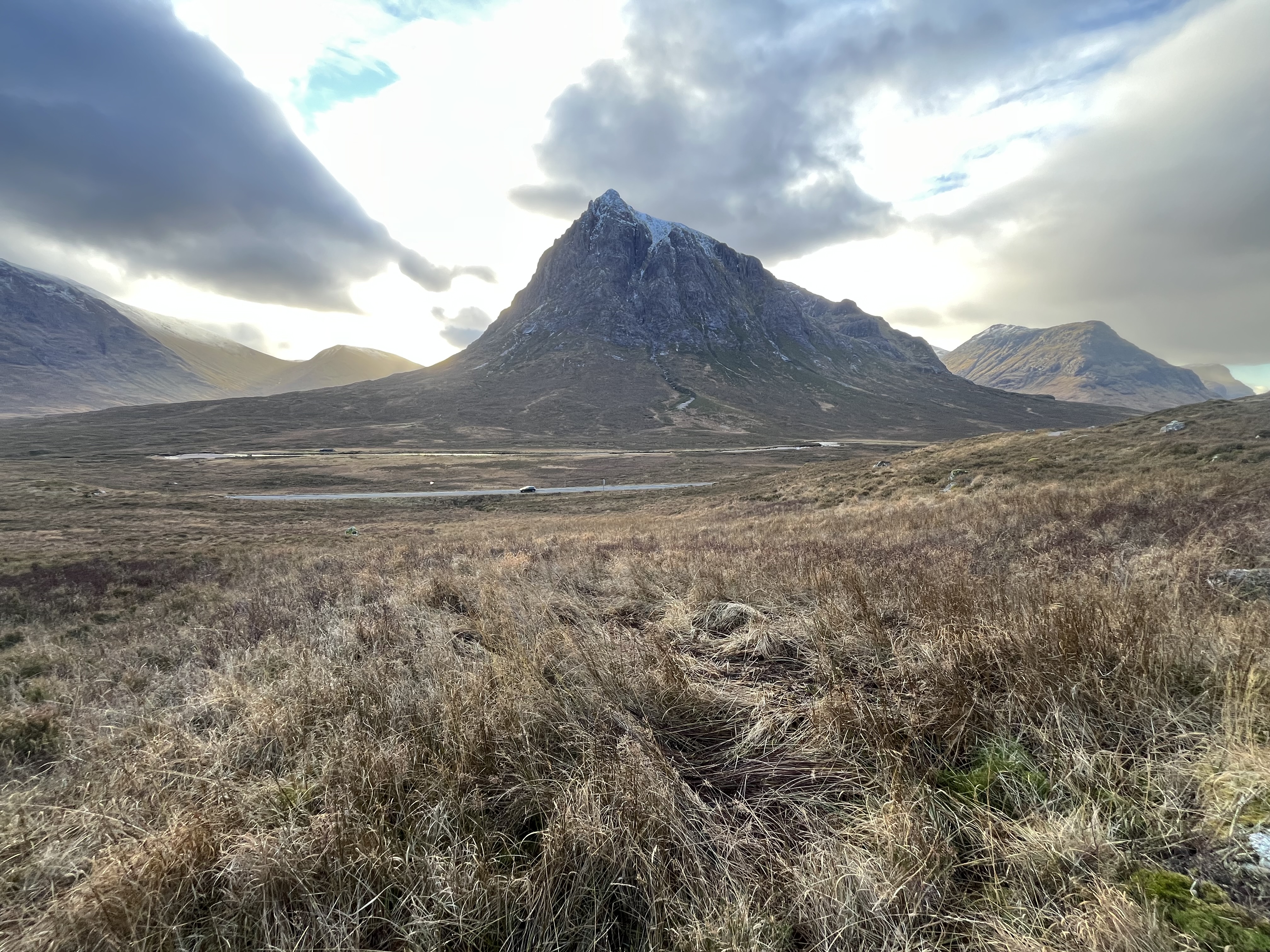
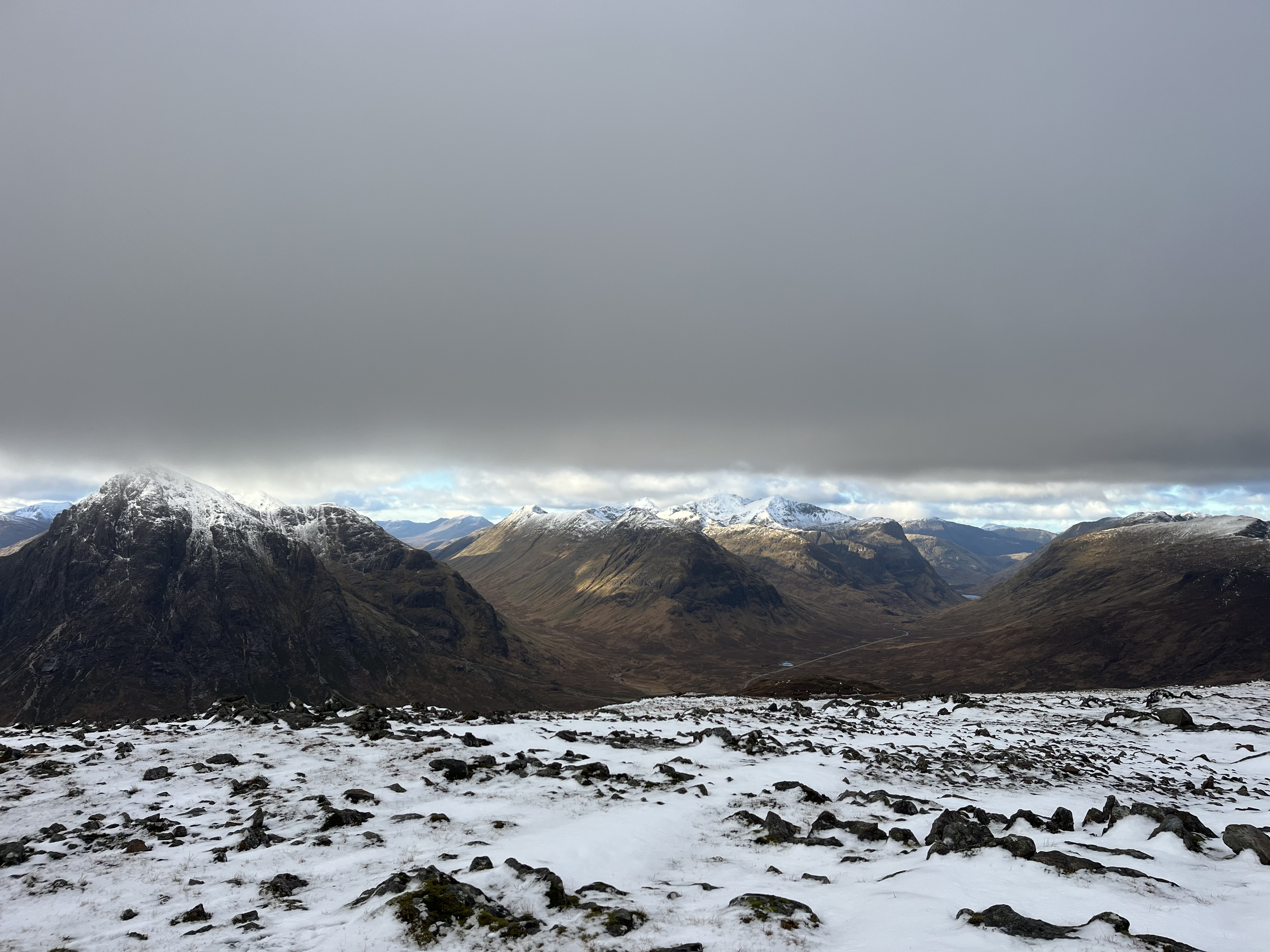
That night I found a much better place to sleep, properly sheltered from the wind. With another snowy day behind me, I started looking ahead to the next one — a double Munro (peaks above 3,000 feet) that seemed tough but doable, even without crampons or poles.
The next morning was clear and calm, at least at the start of the hike to Stob Dubh and Stob Coire Raineach. Winter days are short, so early starts matter. Boots on at eight, moving by half past. Cold, but worth it.
The route followed a river at first, then opened out into some of the best views I’ve had anywhere in the UK. The climb to the first Munro was short and steep, icy near the top, and very windy on the summit. The views made up for it. In the distance, I could see tiny dots of colour — other people heading towards the second peak.

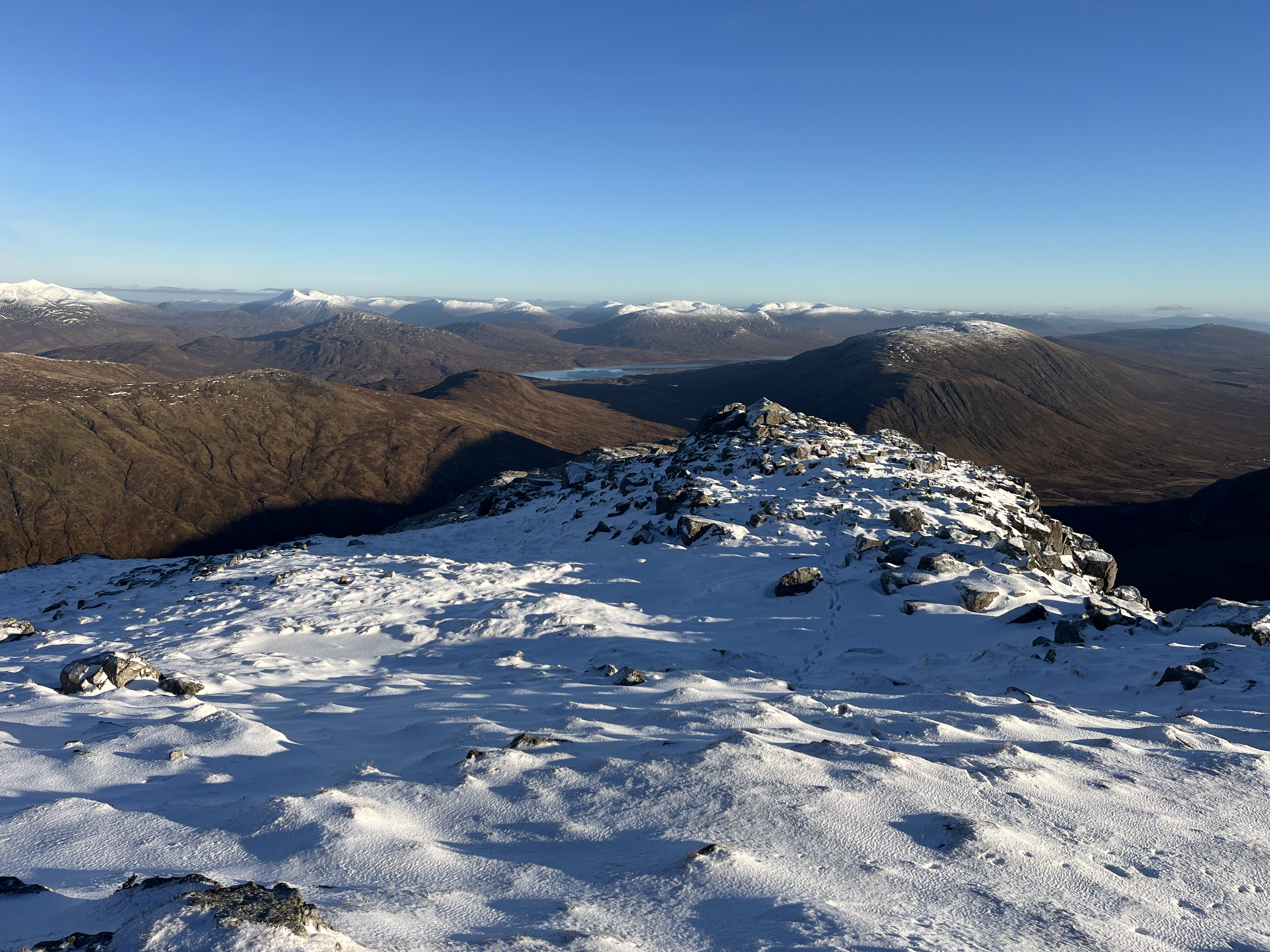
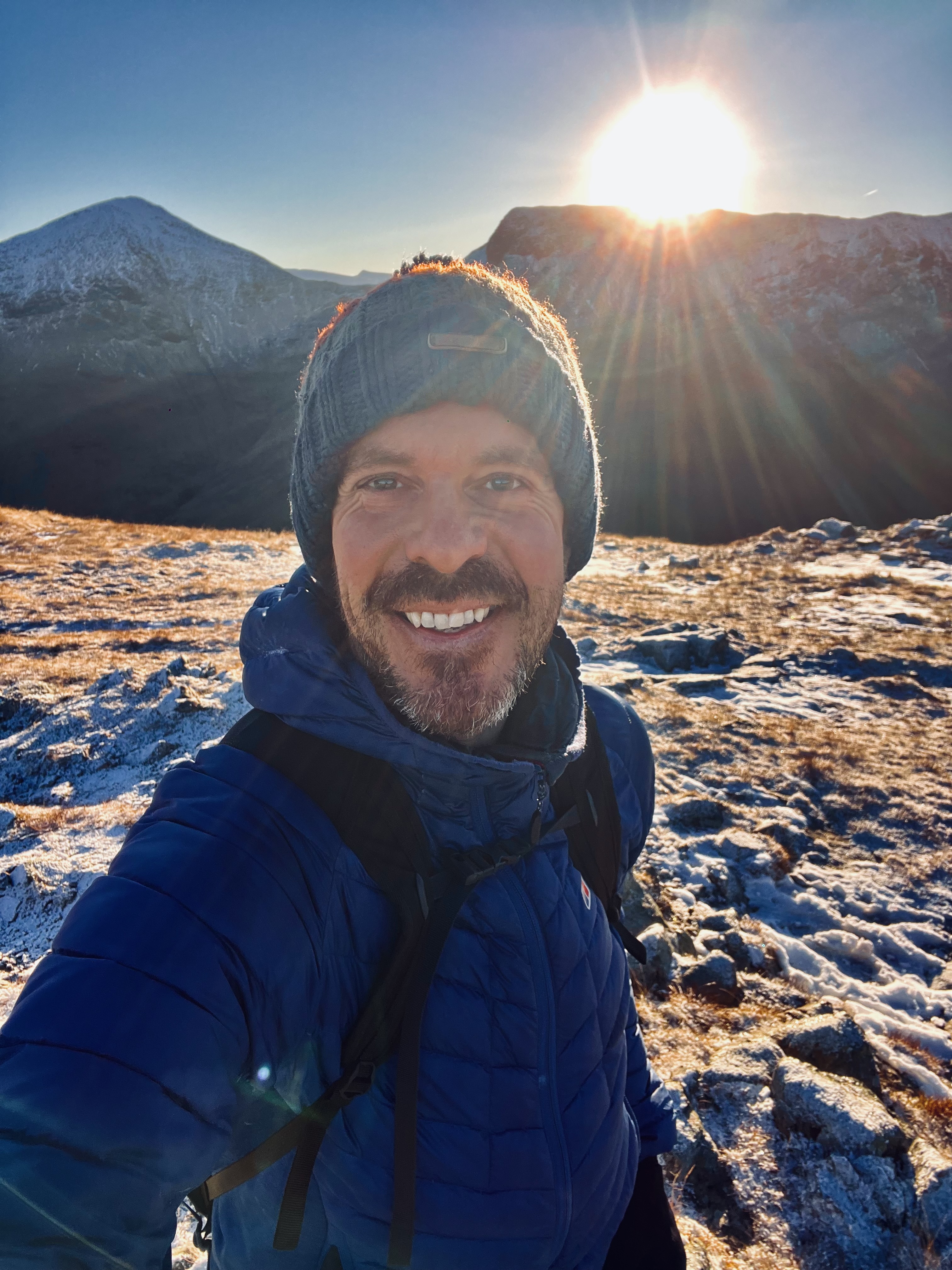
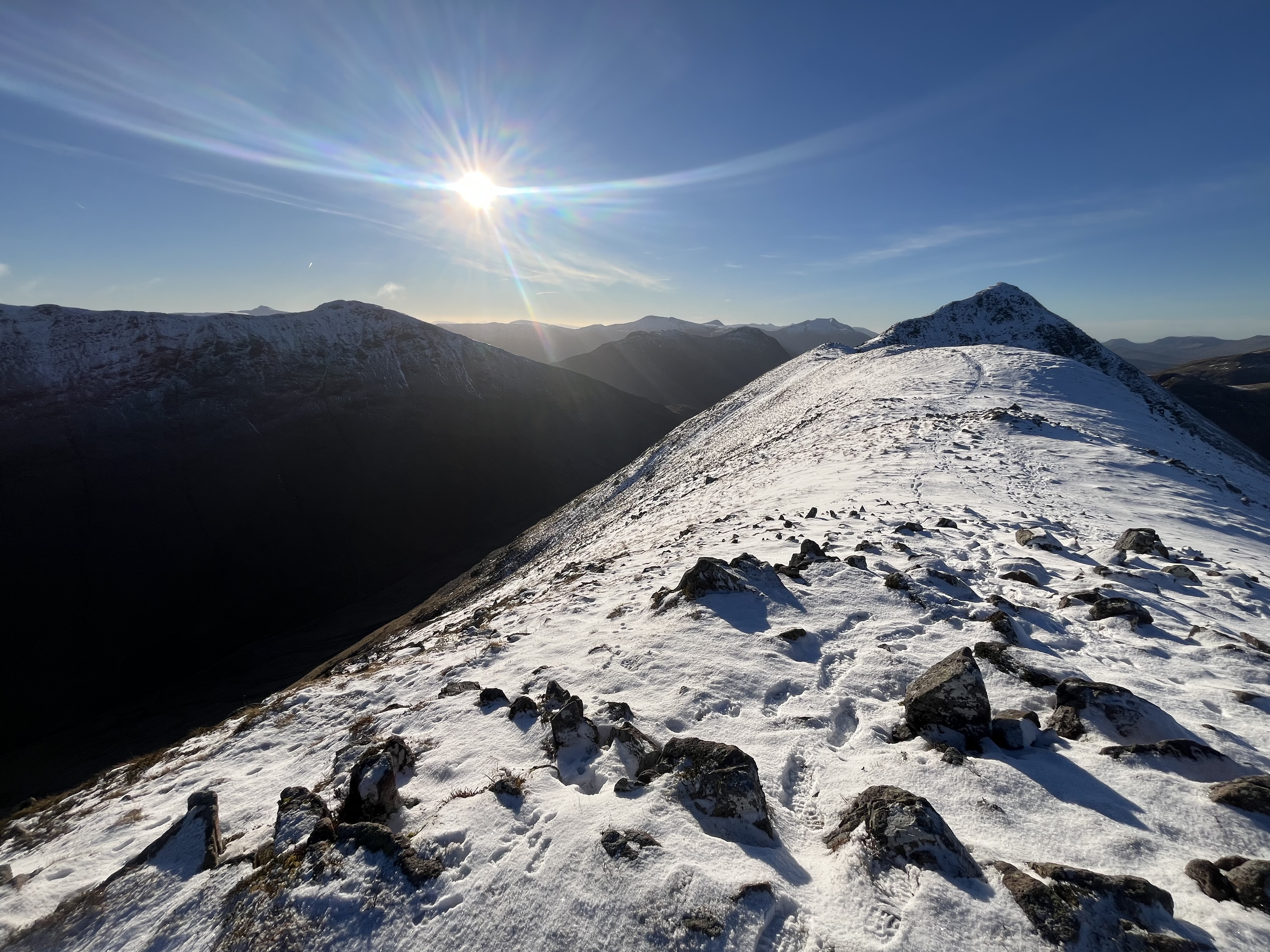
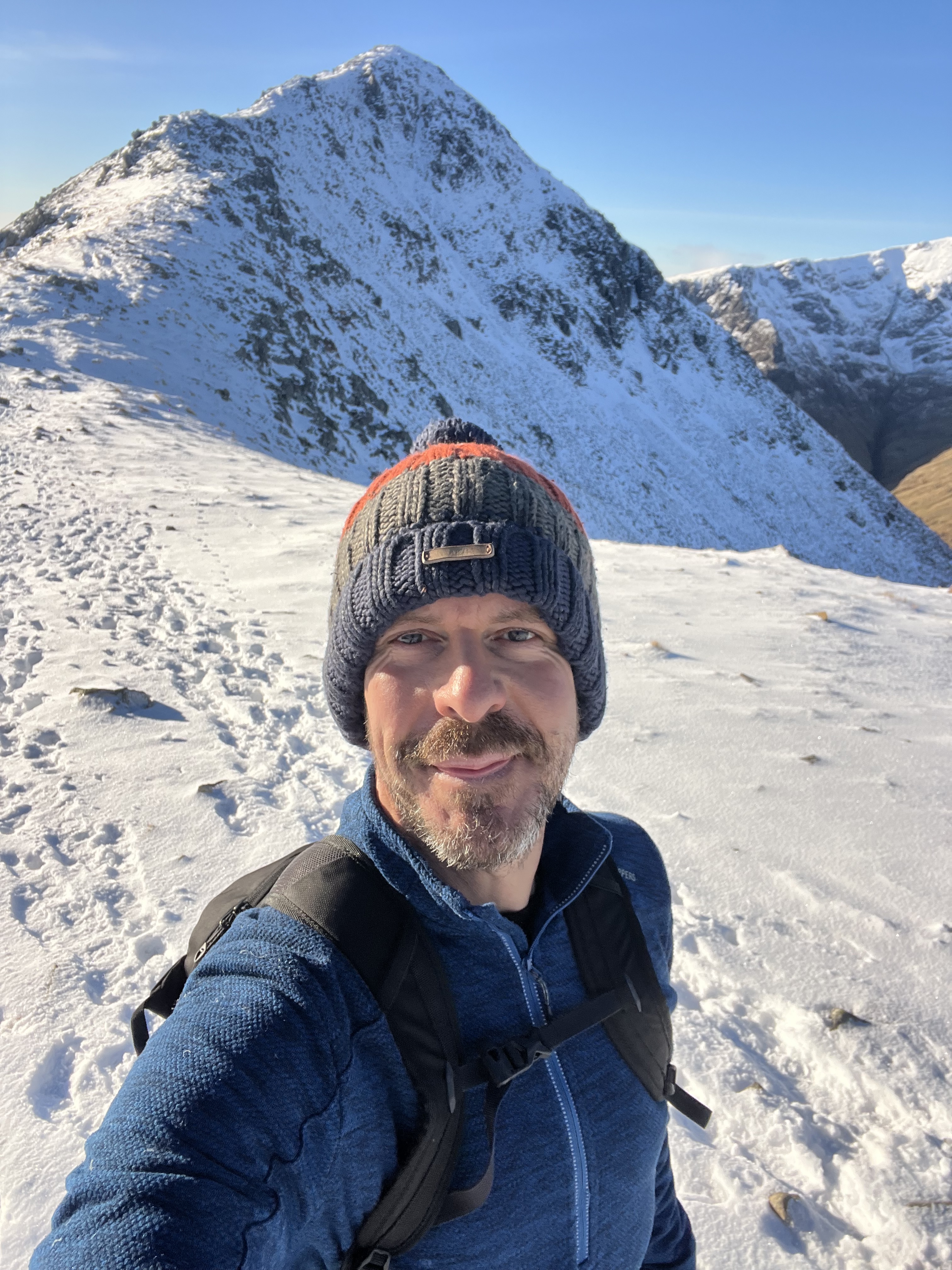
I dropped back to the plateau and started up again, soon out on the ridge. It looked narrow from below and it was, but with careful footing it felt more fun than sketchy. One side dropped into a huge valley with a river running north to south. On the other side was another deep drop. Ben Nevis sat clearly in the distance.
The walk down was long and tiring, but the crunch of snow underfoot never really got old. There’s something about cold air, snow, and mountains that just works. I hadn’t realised how much I’d missed it. This was easily one of the best hikes I’ve done in the UK — maybe anywhere.
Everyone I spoke to that day was in good spirits, clearly buzzing from the conditions.


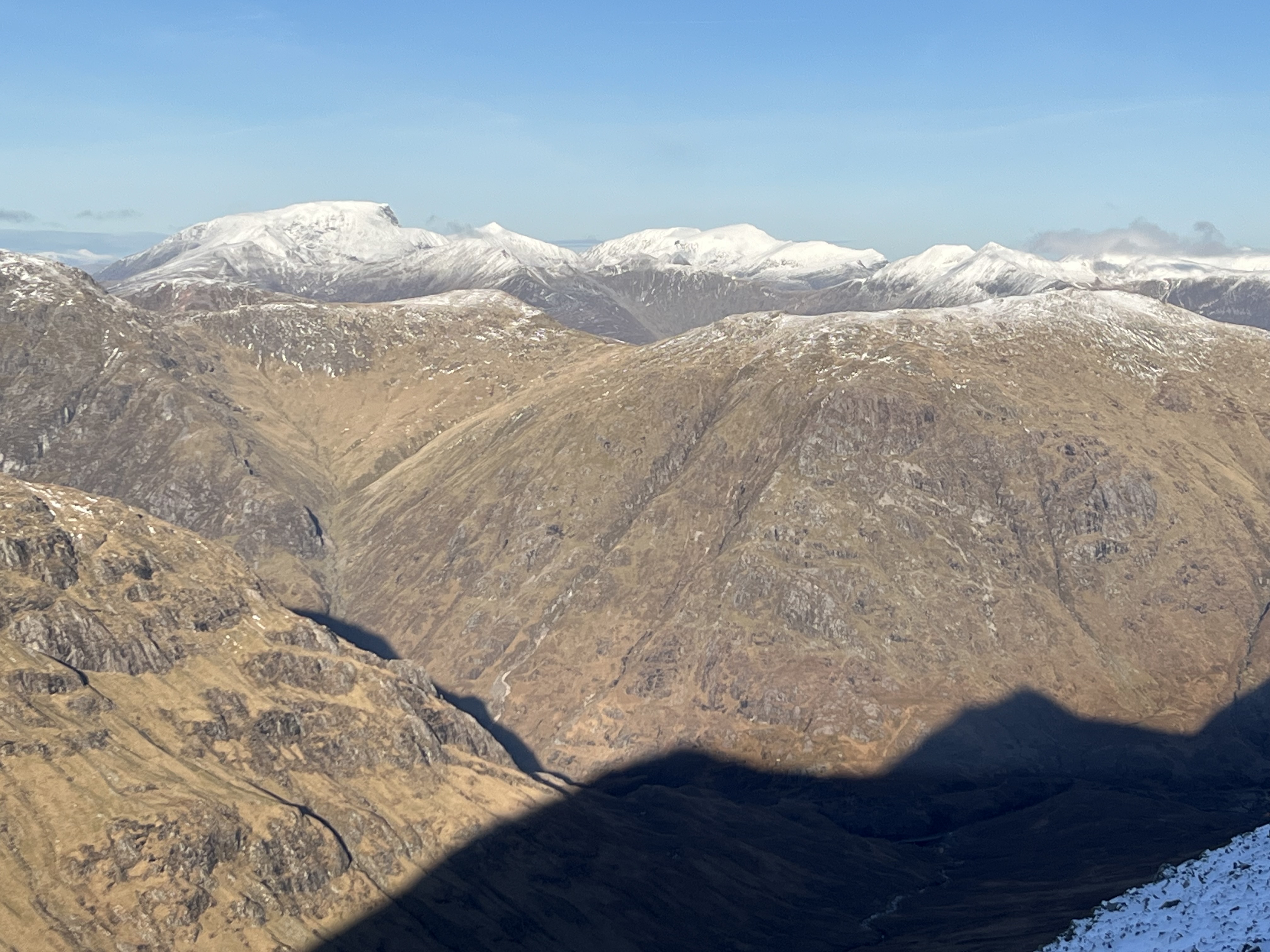

The weather looked ready to worsen the next day, so I decided to head back towards the shores of Loch Lomond and take things easy before the long drive south. I knew my luck had been in with the weather. It was Scotland in November, after all. Blue skies, snow on the hills, and being in the right place at the right time.
I’m glad I took the chance to explore, even if it meant some pretty cold nights sleeping in the car.
That’s all part of it.
 John Alex Clarke